In two days I'm off to the UK to visit family, then I have a day in the US before heading to Argentina and then onto Antarctica. There may be penguins, but there will definitely be a blog entry about my adventures. Until then ...
Sunday, December 16, 2012
A quick update and a holiday Garland
My desktop is covered in half completed blog articles, perhaps I can get some of them finished over the Christmas break. The past couple of months I've been deluged with work but I've submitted, or had published, 6 scientific/conservation articles and graduated three graduate students, so even though I've not been a productive blogger, I've been a productive academic. My house is also full of trinkets and presents for people that I've made from "sculpey" clay, which has kept me busy while I'm not working.
In two days I'm off to the UK to visit family, then I have a day in the US before heading to Argentina and then onto Antarctica. There may be penguins, but there will definitely be a blog entry about my adventures. Until then ...
In two days I'm off to the UK to visit family, then I have a day in the US before heading to Argentina and then onto Antarctica. There may be penguins, but there will definitely be a blog entry about my adventures. Until then ...

Monday, October 29, 2012
Englanders in New England
I’ve been a little slack in keeping up with this blog – one reason
being that I was away on a road trip with my folks, and I’ve been a bit snowed
under with work since I got back. Sorry ...
So how was the trip? I have to admit, it was a lot of fun. New
England in October is ridiculously picturesque, with those vibrant fall colors
and we had clear, crisp Autumnal weather for most of the trip, which
essentially involved driving from one historic B&B or tavern to another.
My
father and step-mother, however, despite being out of their native habitat, do
not seem to get that (a) America is not England and (b) it is in the 21st
century. We constantly had questions about whether we had relatively normal
things (e.g. TiVO, to the door mail service, instant coffee), yet surprise when
English things aren’t routinely found in America (e.g. HP sauce):
“It's
not like in England”
“Yes,
that's because we're not in England!”
My
step-mother also had a rather irritating habit of saying “Oh gosh, really?!”
after everything we said. But still it was a nice trip.
The
rather convoluted journey was aided by my new TomTom GPS which has Stephen Fry’s
voice programmed into it. Navigating foreign terrain is so much calmer and less
fretful with the calming tones of Mr Fry telling you where to got and asking to
“turn left up ahead if you wouldn’ mind”, and “it would be terribly nice if you
changed lanes now”. Towards the end of the trip if felt like we had him in the
car with us, and we actually started conversing with the TomTom as if it were
alive. Anyway, to cut a long story short, here’s a little summary of the trip:
Day 1 – A
mammoth drive from Virginia, through Maryland, Delaware, New Jersey, New York,
Connecticut, and finally finishing in Massachusetts. We stayed in the college
town of Hadley, at a quaint B&B
built in 1795. For poster beds and crumpets for breakfast, who could want for
anything more.

Day 2 -
Up through MA, stopping in Portsmouth New Hampshire for lunch at the Portmouth
Brewing Co (best known for the Smuttynose brand), for a flight of beers and to
fill the trunk with “supplies”. Then we headed up the coast to Maine. Home for
the next night was "the captain's house" - a quaint B&B on the
shore. I love the Maine scenery, especially when it’s foggy and slightly mysterious.
There were a few times when if felt like we were driving through a Stephen king
novel.

Day 3 - The
Captain’s house is famous for its food –and the day started with fantastic three
course breakfasts starting with fruit soups and serious coffee. Behind the
B&B was some extensive bogland with trails,that had to be explored. We were
on a quest to try to find moose. However, some serious rain a few days previously
meant that the trails were more like “the fire swamp” in the Princess Bride,
and we expected to at any moment be attacked by rodents of unusual size. The
weather started to close in, but not before hiking off to a coastal headland
and looking for ghost ships amongst the fog and murk.


For the
afternoon, we headed into “Bahaba”, a town with more lobster, moose and
lighthouse crap for sail than you could shake a stick at. Also, there appeared
to be only a dozen people in the whole town below the age of 60. Beer supplies
were already running low, so they were replenished at Bar Harbor Brewing Co.

Back at the
Captain’s house, a fire had been lit, hot chocolate was brewed up, and a couple
of bottles of local wine were opened. Evening in front the fire place reading
books on comfy chairs in front of crackling logs, was a perfect end to the day.

Day 4 - More
excellent breakfast although our enjoyment was somewhat diminished by loud oil
& gas executives in the adjacent dining room criticizing “nutjob”, “hippy”,
“treehugging” environmentalists and criticizing the government for the temerity
of trying to introduce some environmental safeguards. From the anecdotes that
we heard about cutting corners and corruption, it seemed that the government
wasn’t regulating the oil and gas industry enough. However we were far to
British to make a scene and scoffed down our cranberry and blueberry pancakes
with maple syrup in silence, then
slipped into diabetic comas.
More driving to the historic Jameson Tavern, in Freeport (Maine). As an aside, this
tavern is reputed to be haunted by the ghost of a girl called Emily, and a
mysterious lurking figure in a top hat. A block or so away, or foggy and stormy
nights, the locals say you can sometimes the ghost of “The Dash”, a sunken
schooner, possibly a smuggling vessel, Freeport’s own version of “The Black
Pearl”. Ghosts aside, the tavern had the best pub fries ever, hot chocolate to die for, and some
extremely nice ales (thumbs up for Dr Hyde's angry ale and Gritty's Halloween seasonal).

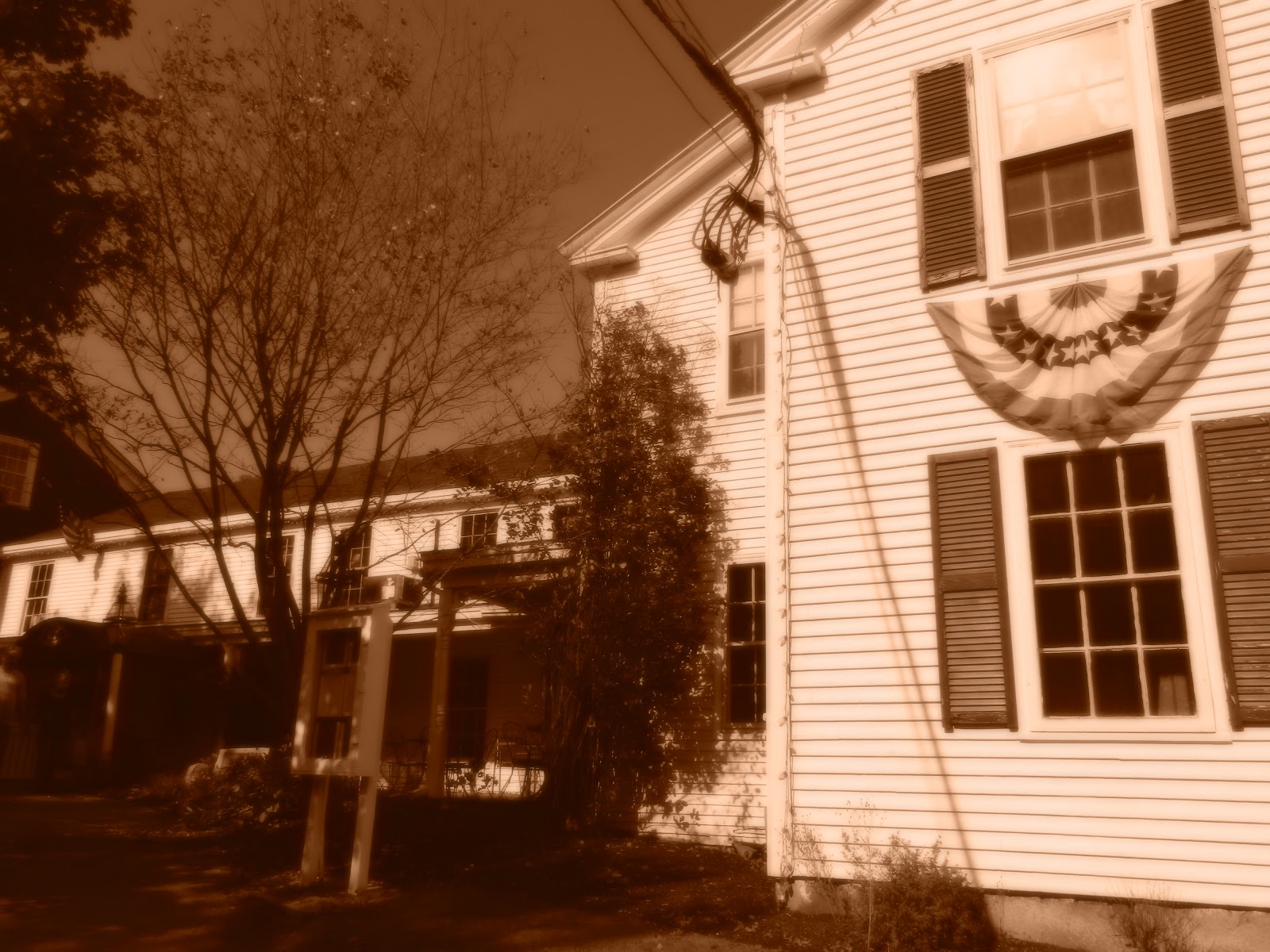
The entrepid adventurers, then turned away from the coast and
headed inland into New Hampshire and we stayed in another 18th
century B&B in Hillsborough. Another four poster bed and a gorgeous fireplace
furnished lounge. We popped into town and yet another tavern in a historic
buidling : “Tooky Mills”.
Although unlike most of our tavern visits, this one hadn’t always been a pub in
the 19th century it had been an underwear factory – which explained
why it’s décor included long johns and bloomers.


Day 5 – We
headed into the historic center of Hillsborough, which was quaint as quaint can
be. There were a number of traditional crafts shops, and the family aided the
New Hampshire economy by spending nearly a thousand dollars in the pewter shop
alone. I’m now the proud owner of a tankard the size of my head. Basically a
metal bucket with a lid, although technically I have to wait until my birthday
next year to use it (it’s a present). The afternoon involved a bit of work and
visiting a friend who was giving a lecture/book signing event on killer whales,
then off along rural roads, driving through leafy avenues and passing mom and
pop convenience stores and maple syrup stalls, as we tootled around New
Hampshire. As dusk drew on, the scenery became more and more like “Sleepy
Hollow” as if a pumpkin-headed horseman might leap out in front of us at any
moment. Very atmospheric.


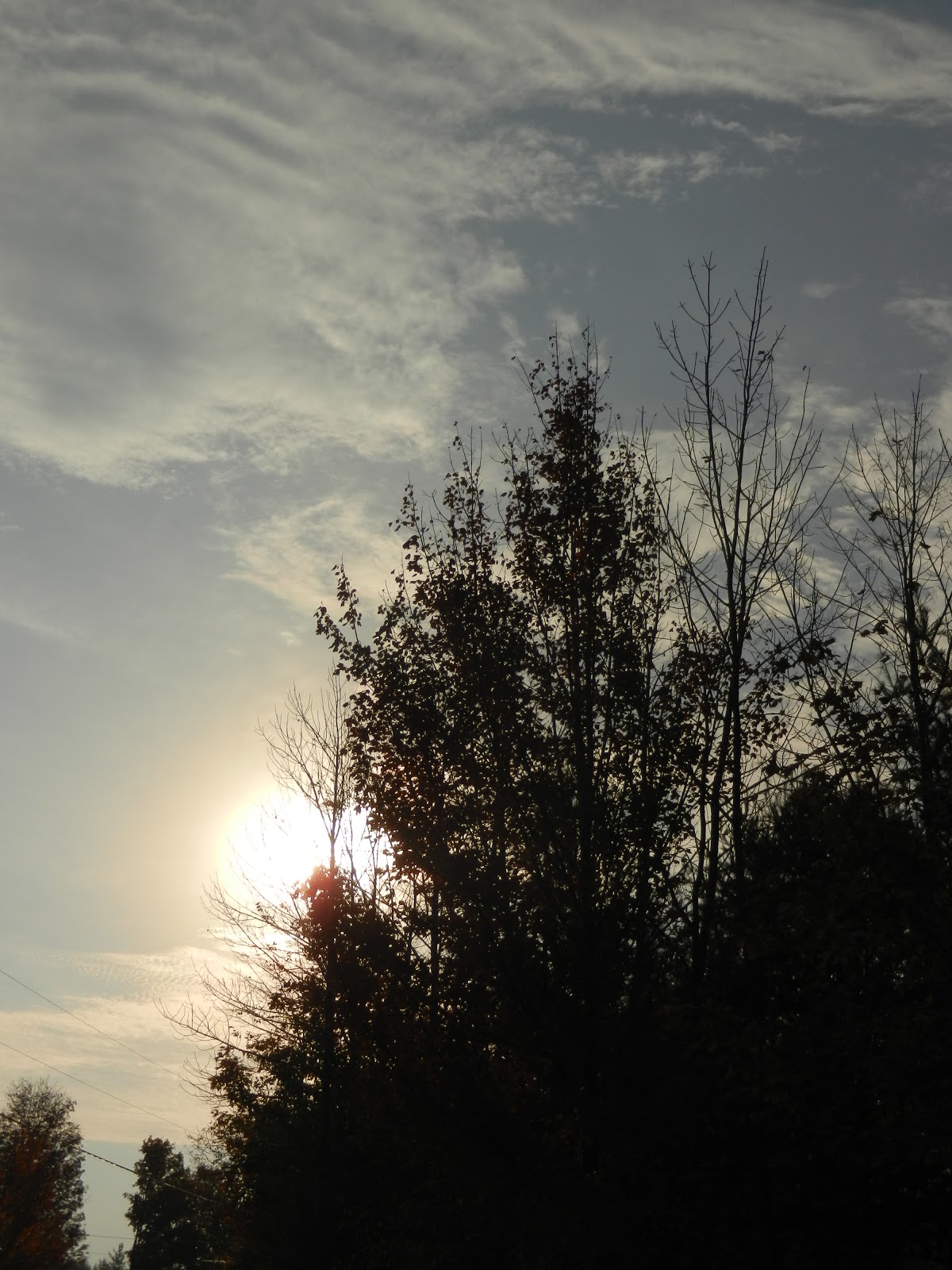

Vermont was
also a great place to stock up on supplies. Any remaining space in the car was
filled with cheeses, maple syrup, preserves, beer/cider and other such goodies.
The
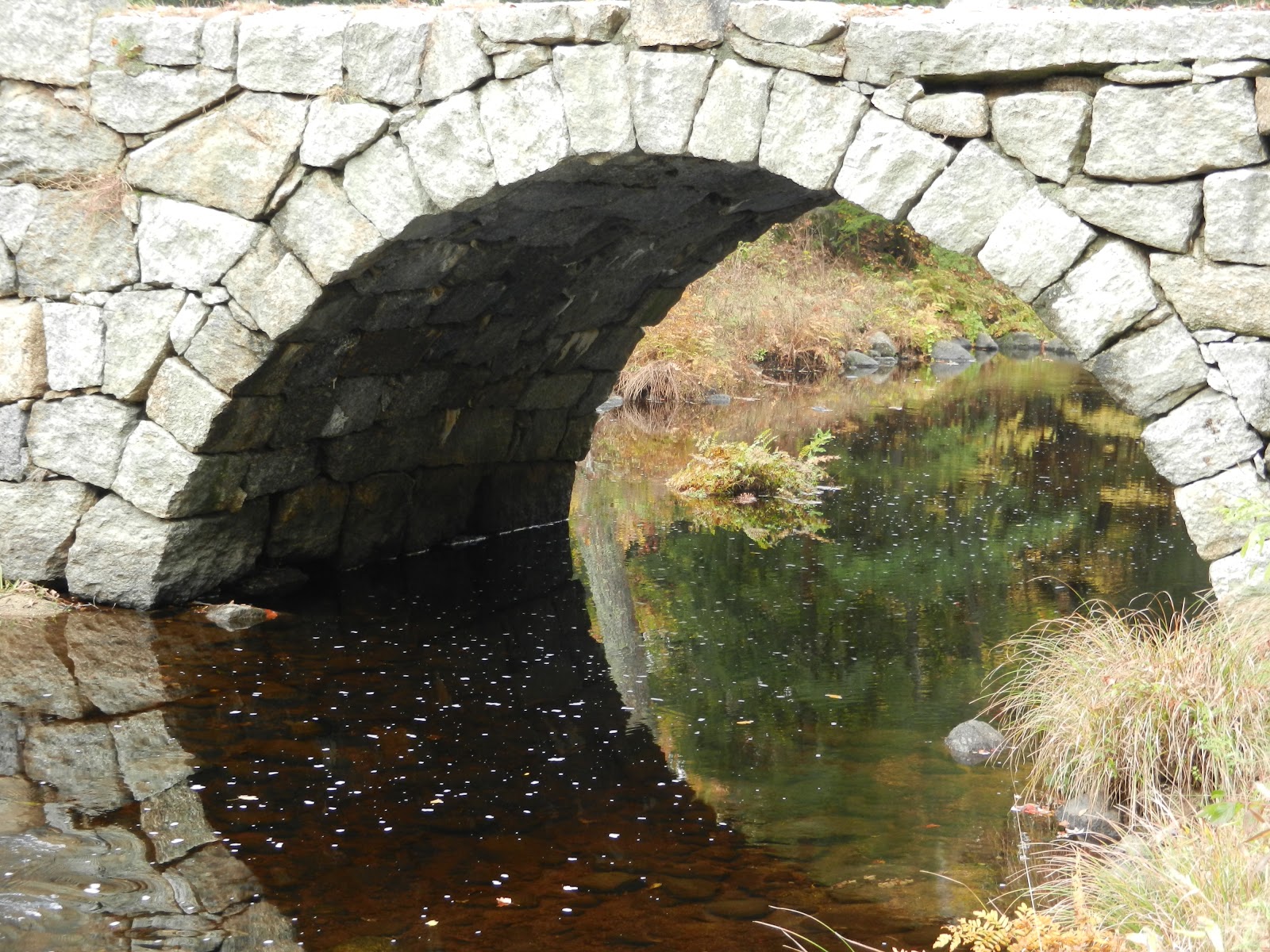
final night was spent in Bellows Falls, Vermont and we had a slap up final
dinner in Leslie’s
Tavern (est 1795): mushroom soup, mushroom ravioli and pumpkin cheesecake.
Pumpkin spiced beer and local reds. Mmmm.

Day 6 –
Time to get back to Virginia, reality, and less face it, dieting – the trip had
been extremely calorific and the liver cells needed a bit of a rest L
But all in all, a good time was had by all.


Monday, October 8, 2012
Proud to be a Murican
So I
have finally become a us citizen (actually a dual citizen, as I could no more
give up my UK citizenship than I could give up beer and chocolate - my
Britishness is such an intrinsic part if me).
*link to the karaoke version, so you can sing along too...
This is
a process that has cost over a thousand dollars, has generated an inch thick
file of documents and as an introduction into what it means to be in America, I
have to say it does not flatter the country. Throughout, the whole process has
been marred with chaos and incompetence. Lost paperwork that miraculously
reappears after a call to the local congressional office - this has happened
three times, and it smacks of corruption with a soupcon of evil, when who you
know seems to help your process along, and without it your application is filed
into the big round file on the floor. Also, letters contradicting them selves
arrive from the powers that be (e.g. a letter saying "we have not received your paper work and
therefore are canceling your application" arrives on the same day another lands on the doorstep noting
that my paperwork has been received and processed, etc etc etc.). Finally, the State of
Virginia unilaterally deciding to change my name, leading to me have to
petition the court to change it back...
Once I
got my final notification that my citizenship "ceremony" was nigh, I
thought the it was the end of the trail of trials and incompetence, but no, the
immigration service had to have one last hurrah,
First,
the address of the event said the immigration offices - it turned out it was
actually in a community college's theater. As a result, a lot of participants
actually went to the local offices, and missed the event.
Not as
many as should have done though, because although the invitation letter
distinctly said be the at 8 am without fail, immigration officers did not turn
up until 8:30, to funnel 400 or so people crammed into a tiny vestibule with no
idea what was going on. So there was time to get to the (closed) offices and then try to find the actual venue. Then came the farce of processing 400 people in said
vestibule, with just half a dozen officers having to check everyone's paper
work.
Finally
everyone was seated and ready to progress by 10:30...
The
initial part of the ceremony had us stand up as our original countries were
called. The chief immigration officer making announcements was incredibly
"chipper" yet profoundly patronizing. She so reminded me of Effie
Trinket (from the Hunger Games) that when they called on me to stand, I felt like yelling out "I
volunteer to be tribute!"
There
then followed the oath. Now, myself, along with many others, were there to
become dual citizens. However the oath you have to say has you renouncing all
ties with other nations absolutely - effectively your first act as a citizen
is to effectively lie. I could not bring myself to do that, so instead of
swearing a blatant lie and to "absolutely and entirely renounce" my allegiance to the UK, I said my own oath: I "do not entirely renounce" ...
We were
then congratulated and given little stars and stripes flags to wave, like a
bunch of kindergarteners as they played a DVD of "I'm proud to be an American" * which the audience could sing along to.
Effie
Trinket then reappears to congratulate us and talk to us like 3 year olds about
how exciting this was and did we want to have pictures taken with immigration
officials. I got out of there as soon as I possibly could, back into the jam-packed vestibule and the crush of 400 people trying to get their citizenship
certificates, while a hundred or so more who had gone to the wrong location
cried and pleaded to be allowed to do the citizenship ceremony. It was 1pm by the time I left.
By the end, a potentially solem and patriotic event had basically been reduced to the level of organization and grandeur of elementary school sports day. A lot of people were frustrated, irritated and upset on their first day of citizenhood, pride was not something felt by the majority.
Anyway, so now I'm a US citizen. I can vote. For the first time in ten years of paying taxes, at
a rate more than double that of Mitt Romney I might add, I now no longer have taxation
without representation. I think there was a bit disagreement about that in the
past ...*link to the karaoke version, so you can sing along too...
Sunday, September 16, 2012
The water of life
The word whisky comes from uisge beatha, the Gaelic for "water of
life" of “frisky water”. Irish whiskey has an "e" in it thanks
to marketers a in the last century wanted to distinguish 'classier' Irish
whiskey from large quantities of Scottish rotgut that was on the market. Oh,
how times change. But nevertheless, Scotch is now always spelt whisky.
First of all I should point out the differences between
vodka and whisky. Vodka, despite common misperceptions, is not made from
potatoes, but can be distilled from anything with sugars that can ferment to
produce alcohol. What makes it vodka is that it is distilled to as close as
pure alcohol as possible, and is then cut with water. Most of the actual flavor
of vodka is more to do with the quality of water that dilutes the spirit than
the alcohol itself. Crappy water = crappy vodka.
Scotch is essentially distilled beer, but unlike vodka, but
it's only distilled to a 75% alcohol content, and the final spirit contains
'impurities' that give it much of its flavor. The rest of the flavor and
character comes from the aging process, or malting process in single malts, but
more of that later…
As I said, Scotch whisky is, basically distilled beer from
barley grain. The most sophisticated (and interesting) of the Scotch types, in
terms of flavor and process, is single malt, and that’s what I’ll mostly be
describing here. In single malt whisky, the barley is soaked in water for two
or three days (the quality of the water is an important factor in the character
of the whisky) and then the grain is spread out allowed to germinate for a week
or more - this is the malting process during which many of the starches in the
grain transform into a variety of sugars. This stage is time and labor
intensive and is skipped in other types of whiskies, but it's this process that
gives single malts much of their complexity. After the germination stage, the
grain is dried, and this stage can also add to the flavor of the whisky.
Traditionally single malts are dried in a kiln fueled by peat. The more smoke
that's allowed to permeate the gain, the peatier whisky (e.g. malts from the
island of Islay are smoked heavily and therefore very peaty). Again this
significantly adds to the flavor in single malts, as opposed to other whiskies.
The grain is then ground up into grist and poured into a large barrel or mash tun to which water is added (again the type of water is
important, and the chemical composition of the water source is important in the
final flavor of the whisky). The sugars in the grain dissolve in the water and
the sugary liquid, or wort is drained
off. More water is added to the grist, and wort drawn off. The number of times
this happens is variable and is distillery-specific.
The liquid is then has yeast added and fermentation starts
on the wash as the liquid is now
called. The wash
is fermented for about 2 days, with a final alcohol content of about 7-8%.
Now comes the distilling. For single malts, a 'pot' still is
used (which looks like a big copper Hershey's kiss) and the liquid is distilled
in batches. This again is distinctive from other whiskies where distillation is
continuous (in a so called Coffey still), a process which is faster and not so
labor intensive.
The first distillation (referred to as the low wines; 20-25% alcohol) is taken off and distilled again (to
become 75% alcohol). From this second distillate the first part (foreshot) and end part (feints) are returned to a batch the low
wine for re-distilling, as they contain some noxious impurities. The middle cut
or spirit is drawn off, and will be
used for the whisky itself. The decision
when to ' cut' is partly automated, but some distilleries rely on a still man
who makes their decision based on experience, and partly magic.
The spirit is then placed in casks to age. The location for
aging is important as it can affect the flavor - for example the salty sea air
of Laphroaig distillery gives their whisky a distinct iodine/hospital smell
(that's due to a high iodine concentration in aerosolized sea salt that
permeate the casks).
For single malts the casks are charred oak bourbon barrels
imported from the US (under US law bourbon barrels can only be used once).
During the aging process the spirit reacts with the oak barrels, going from a
clear to a golden color. The longer the spirit is aged, usually the deeper the
color (and the mellower and less harsh the taste). For some brands, the spirit
is transferred to a sherry, port, wine, or madeira cask to 'finish' (usually
for two years) and again it picks up some subtle flavoring due to reactions
with the wine infused cask wood.
During the aging process 40-50% of the whisky evaporates
away and is lost. This is referred to as "the angel's share" (as an aside I highly recommend the Scottish
movie "the Angel's Share" a fun "heist" movie, although
non-Glaswegians will probably need sub-titles).
When aging is completed the whisky is bottled. Scotch has to
be aged at least a three years and a day, with most Scotch being 8 years. Most
single malts are aged 10 years. Sometimes whiskies of different ages are mixed
together, but the age you see on the bottle will be the youngest batch in the mix. However, your bottle may be
mixed with an older batch, often to give a more mellowed flavor. "Single
cask" whisky is drawn from just one cask, and not mixed. The whisky is
55-57% alcohol at this stage, and so has to be cut with water again, to 40% (or
43% for export) with the signature water supply before bottling (unless it's
bottled as "cask strength"). Once in the bottle, although there may
be a little evaporation, there is no further aging as such - unlike wine, there
is negligible oxidization in the bottle. So you might as well drink it.
Single malts can consist of multiple age batches, from
multiple casks, but from only one type of whisky at a specific distillery.
Blended scotches can have up to 40 different types of whisky within, from
multiple distilleries, some single malt, but much of it grain whisky (see
American whiskies below). But they all have to be made in Scotland under
Scottish distilling laws.
For each region of Scotland, single malts have a slightly
different flavor. Lowland malts are slightly citrusy, Islay malts are very
peaty, Speyside malts are sweet and slightly fruity, and highland malts have
vanilla and spicy tones.
My personal favourite is Glenmorangie (port or madeira wood
finish). It’s also the favorite of Connor and Duncan MacLeod of the Clan
Macleod, so for me there can be only one. At the moment I have 22 bottles of
single malt in the house, and some high end bourbons too.
As a final note, Scotch
should never be drunk with ice. That is sacrilegious. Connoisseurs will a tiny bit
of water, no more than a teaspoonful, to their whisky, and this will in fact
help bring out the favor of the scotch – IF, AND ONLY IF, the water is the best
spring water. Adding crappy faucet/tap water to your fine Scotch is just plain
dumb. You can now (from thinkgeek.com) get ‘whisky stones’ for your Scotch –
pieces of granite that you can cool in your freezer, and chill your scotch
without diluting on contaminating it. These are fine, although they will show
down evaporation and you’ll lose some of the bouquet of the whisky. Just be
careful how you wash the stones after – and do not, as a friend did, scrub them
with detergent, or you’ll have forever soapy-tasting whisky.
Anyone who puts coke,
or even worse, Iron-bru, in good single malt, deserves to fry (in batter) in a
special layer of hell.
PS. In the US, whiskies are usually denoted by the cereal
grain that the mash is largely (at least 51%) derived from, although bourbon is
51% corn (maize), whereas corn whiskey has a mash that is 80% corn. Bourbon
that has been aged at least 2 (often 4) years and doesn’t have added colorings,
flavorings or grain spirits, can be called straight
bourbon. In addition to bourbon
& corn whiskey, you will find barley, wheat and rye whiskies in the US
(barley whiskies in the US may also be malted in a process similar, but not
identical, to single malt Scotch too). Tennessee whiskey is essentially
bourbon, but some distilleries filter the whisky through sugar maple charcoal,
which is supposed to improve the flavor. Canadian whiskies are different again
(mostly corn/wheat with other grains aged 3-6 years typically, and are usually blended,
even if they are referred to as “rye” whisky). The one exception is Glenora
(Nova Scotia) which is a pot stilled, single malt, produced in Scottish
fashion, that I am extremely curious to try.
Prologue to the next bit
I was sat thinking about what I should write about, but most
of my week has been a boring succession of meetings and paperwork. There was a
bright spot on Friday when we finally filed away the last of the devastation
that was wrought by the crazy guy (see earlier posts) who had a grudge on me.
We had to go through his numerous deluded accusations before an official panel
and one by one they were determined to be baseless, and in a couple of cases
that crazy guy himself was in fact culpable. There was a final determination
that this had all been a big waste of time an effort, but crazy guy has now
resigned (see the celebratory post below) and so hopefully his campaign against
me is all a thing of the past.
So sipping a glass of congratulatory scotch, I decided to
write about the item in hand, whisky. Which leads me to my next post...
Tuesday, September 11, 2012
Fanny the pirate
One of my regular readers complained about how whiney I’ve been
recently, and ask what happened to the educational stuff. So in penance, here’s
some more pirate stuff, with an article on one of my favourite female pirates
Fanny Campbell.
Fanny Campbell was from a rural community just outside of Boston,
and was engaged to a local lad, a sailor, called William Lovell. Young William
signed on to a merchant ship for a voyage to South America, but while sailing
through the Caribbean his ship was attacked by pirates and the crew press
ganged onto the pirate crew. William, however escaped when the ship docked in
Cuba, but unfortunately the local authorities arrested him and some of his
fellow escapees and he was imprisoned for piracy. After a year of imprisonment,
one of William’s fellow convicts escaped and stowed away on a ship heading for
Boston, and sent a message to Fanny telling her of her fiancé’s woes.
Now, this is where it gets good - Fanny decided to take things into
her own hands. She disguised herself as a man joined the crew of a merchant
ship (as a ship’s officer) sailing to England via Cuba. Fanny had been taught
how to sail and navigate by her beau, and used this skills to get herself a
position. En route to Cuba, Fanny started rumors that the Captain of the ship
was going to encourage the Royal Navy to press gang the crew (for his own
personal profit of course) , and that the First Officer was in on the deal. As
neither were liked by the crew (the Captain was particularly harsh), they
believed her and she effectively led a mutiny. The crew decided to “go pirate”
and chose Fanny Campbell (still disguised as a man) as their Captain. She
turned out to have a very tactical mind and on route to Cuba they sighted,
boarded and captured a British gunship. The two ships sailed into Havana, and a
small team of the crew snuck into the jail and rescued William and a number of
other captives, largely Americans.
Despite having rescued her beau, Fanny kept up her manly disguise,
and continued commanding her small squadron of pirate ships, and quickly
captured another British vessel. In addition to the plunder from the
merchantman, they also discovered that America had declared war on Great
Britain. This meant that British ships were fair game to American vessels and
instead of pirates, Fanny’s largely American crew became a band of patriot
privateers raiding, looting and capturing enemy vessels.
However, technically in order to be bona fide privateers Fanny’s squadron of pirate ships needed
official letters of marque from the American authorities, and so they sailed to
Massachusetts and not only filed their piratical paperwork , but Fanny and William
also got married. Her cover now blown, and also pregnant, Fanny decided to stay
in Massachusetts and began to raise her new family, while William went back to
sea, now a legally recognize privateer in the service of the newly minted United
States of America.
Although there
does seem to have been an actual Fanny Campbell, a lot of the legend associate
with Captain Campbell was embellished thanks to the book “Fanny Campbell, the Female Pirate
Captain; A Tale of the American Revolution” published in 1844 (by Maturin Murray Ballou), which
is about as accurate to history as “Braveheart”.
Despite being exaggerated, the published tales of Fanny actually inspired many
young women to disguise themselves as men during the American Civil war, several
of whom ultimately became as famous as the fearsome Fanny.
Thursday, September 6, 2012
I'm drawing a blank
For the umpteenth time, a student came into my office and launched into discussion expecting me to immediately know what they are talking about and in my head I was thinking (a) who are you and (b) what the hell are you talking about? Partly it may be because I think the human brain can only remember so many names and faces and each time you have new classes in a new semester, some of those old students just have to be deleted to make space. Partly I think it's because for so many students today the world revolves around them, of course you must know who they are and what they are doing, because they are the center of the universe. But I often get students getting insulted and grumpy that I don't remember very tiny thing about their lives. To be fair we have over 1,800 students in the two majors I advise for at the moment, and can get 20 or 30 come through my door on a busy advising day.
As I discovered last week, I have the same problem in conferences. I have to do a lot of schmoozing and socializing in my job, but often has been the time when I've awkwardly tried to steer the conversation and avoid having to introduce someone, because, I just can't remember their name. Recognise the face, dimly, but who they are and what they do, well it's just a blank. Admittedly sometimes there are mitigating circumstances. For example (a) they have a foreign name or strong accent so I didn't get it; (b) I met them in a loud and rambuctious party and didn't hear; (c) I was drunk; or (d) they were so boring I just tuned out and was day dreaming about lying in my hammock/ dragons/ a new research project idea/ a crush or cutie/ beer. So if I'm at a party with you, and I'm politely chatting to an aquaintance, if I don't automatically introduce them to you, please don't ask me to ...
For those of you who sympathize, here's a song just for you ...
Subscribe to:
Posts (Atom)